
This article explains how cPanel users can revoke database privileges from a MySQL user using either the cPanel interface or the MySQL command line.
Method 1: Revoke Privileges via cPanel (Recommended)
- Log in to cPanel.
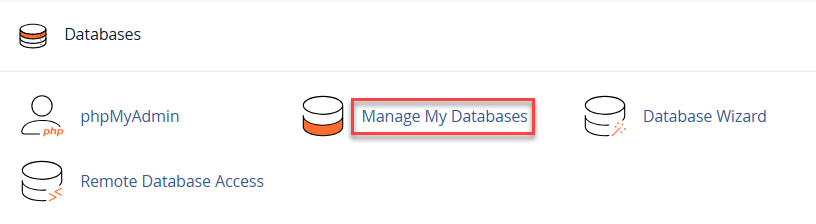
- Navigate to Databases > Manage My Database.
- Scroll down to Current Databases.
- Locate the database and click the Privileged Users.
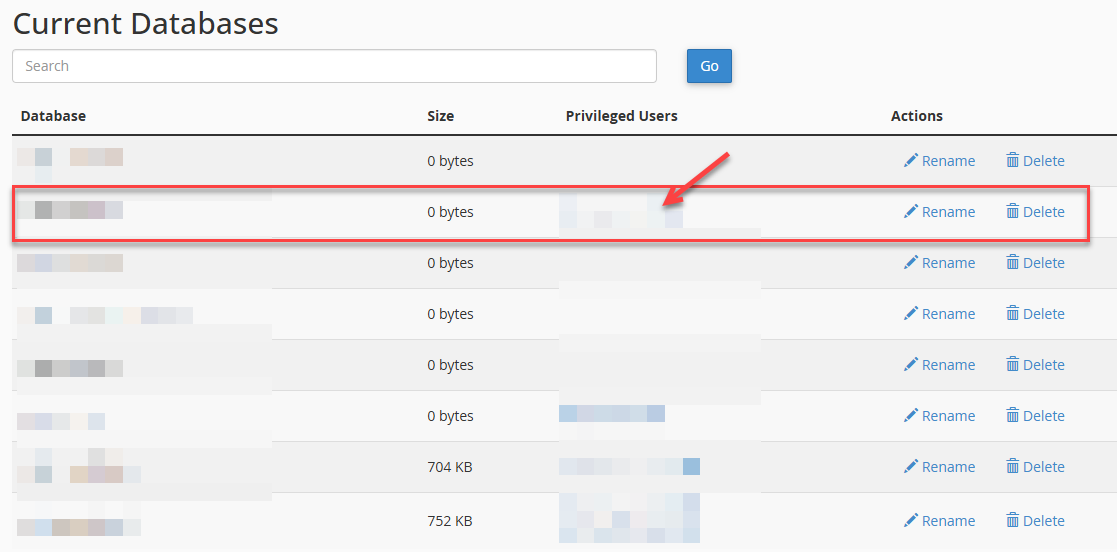
- You will be redirected to Manage User privileges and uncheck the privileges you want to remove (e.g., SELECT, INSERT, UPDATE, DELETE).
- Click Make Changes.
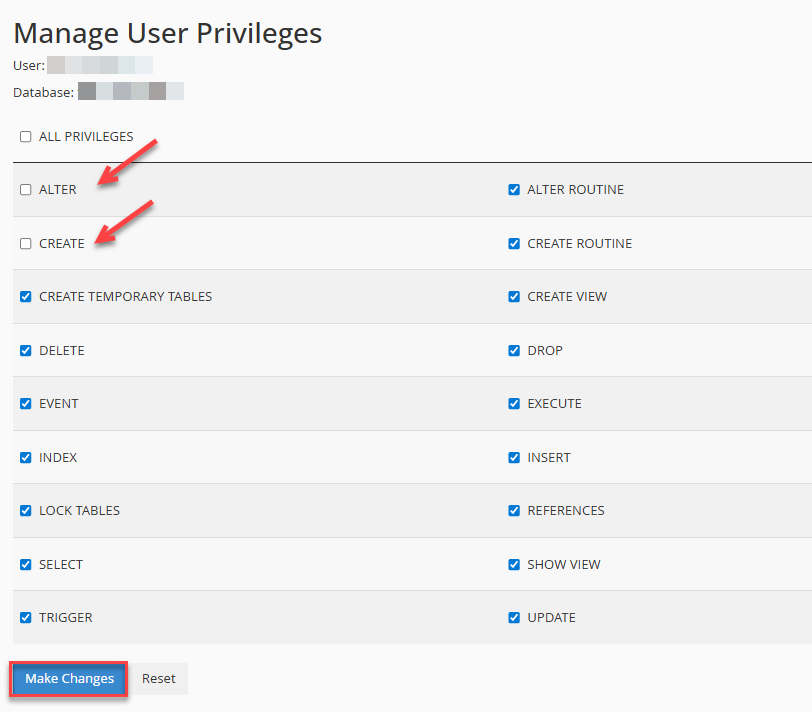
The selected privileges are immediately revoked.
Method 2: Revoke Privileges Using MySQL (Advanced)
- Open cPanel > Terminal or connect via SSH.
- Log in to MySQL:
mysql -u root -
(or use your database user credentials if not root)
- Revoke specific privileges from a user:
REVOKE SELECT, INSERT, UPDATE ON database_name.* FROM 'db_user'@'localhost';
FLUSH PRIVILEGES;
Exit MySQL:
EXIT;
Verify User Privileges
To confirm the current privileges for a user:
SHOW GRANTS FOR 'db_user'@'localhost';
Notes
- Database and user names in cPanel are usually prefixed (e.g., cpaneluser_dbname).
- Revoking privileges does not delete the user or database.
- Changes take effect immediately.
Using the cPanel interface is the safest and easiest way to revoke MySQL privileges. The command-line method is recommended only for advanced users or for automation tasks.
If you have any questions, contact our support team.